

News Details
Introduction to Precision Components of Manual Hydraulic Transporters
As a common cargo handling tool, manual hydraulic trucks are widely used in various warehousing and logistics operations due to their strong load-bearing capacity, flexible movement, and high handling efficiency. This device is assembled from multiple precision components, and its main structural components will be introduced below.
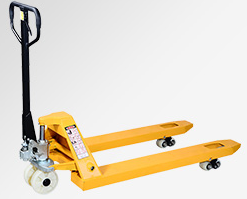
pump body
The pump body is the outer shell of the oil pump, mainly used to protect internal components and store hydraulic oil. Usually, high-strength metal materials such as cast iron or steel are used to ensure that they can withstand the working pressure inside the system.
piston
The piston is one of the core components of the oil pump. By pressing down on the handle, the piston moves up and down in the pump body. In order to effectively prevent hydraulic oil leakage and ensure stable pressure transmission, the piston is usually equipped with sealing materials such as rubber seals.
check valve
There are multiple one-way valves inside the oil pump to control the flow direction of hydraulic oil. For example, during the piston compression process, a one-way valve opens, allowing hydraulic oil to flow into the cylinder; At the same time, the other one-way valve closes to prevent the oil from flowing back. When the piston rises, the states of each one-way valve switch accordingly to maintain the normal working cycle of the system.
Oil outlet and inlet
The inlet is responsible for sucking hydraulic oil into the pump body, while the outlet is used to deliver pressurized hydraulic oil to the cylinder. These two oil ports are usually connected to corresponding oil pipes and sealed at the interface to prevent oil leakage.
The above are the main structural components of manual hydraulic handling vehicles. Through the coordinated operation of various components, the efficient and reliable handling function of the equipment has been achieved.