

News Details
What is the working principle of the oil pump in a manual hydraulic transport vehicle
The hydraulic pump of a manual hydraulic transport vehicle provides fluid pressure and flow by sucking, compressing, and discharging hydraulic oil to supply other actuators in the hydraulic system (such as hydraulic cylinders, hydraulic motors, etc.).
Inhalation stage (suction stroke): The working components of the hydraulic pump, such as the piston or gear, begin to move backwards and suck hydraulic oil from the low-pressure area of the hydraulic oil tank or hydraulic system. During the suction stroke, the inlet valve of the pump opens, allowing hydraulic oil to flow into the working chamber of the pump.
Push out phase (compression stroke): When working components such as pistons or gears begin to move forward, the volume of the working chamber decreases, thereby compressing hydraulic oil. At the same time, the inlet valve is closed to prevent hydraulic oil from flowing back. This process of compressing hydraulic oil increases the pressure in the system.
Output stage (discharge stroke): When working components such as pistons or gears move forward to the forefront position, the pump's outlet valve opens, allowing compressed hydraulic oil to be discharged from the pump's working chamber and flow into the hydraulic system.
By continuously circulating the suction, compression, and discharge of hydraulic oil, hydraulic pumps can provide continuous hydraulic energy output. This output hydraulic pressure can be used by hydraulic systems to perform various tasks, such as driving hydraulic cylinders, driving hydraulic motors, etc.
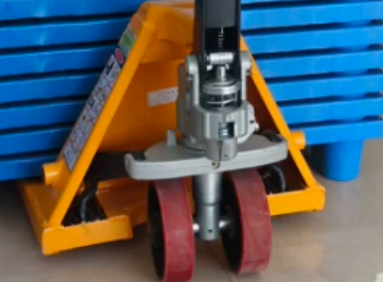
In order to avoid oil leakage during the lifting and handling of heavy objects by manual hydraulic trucks, the manufacturer adopts one-time casting technology and installs an integrated valve core to improve the service life of the oil pump.